

KIGI
JAPANESE WOODCRAFTING
木々 KIGI in Japanese means trees.
Wood has always been a human-friendly material.
In Japan, it was also the main material for creating architecture and its interiors, as well as small and large utility items. Many carpentry and craft techniques were born there, the tradition of which is cultivated to this day.
In Poland, in a country with rich forests like in Japan, there are craftsmen who were inspired by Japanese techniques and their relationship with wood.
KIGI would like to present their works designed for the needs of modern life, which will enrich our everyday life.
KUMIKO
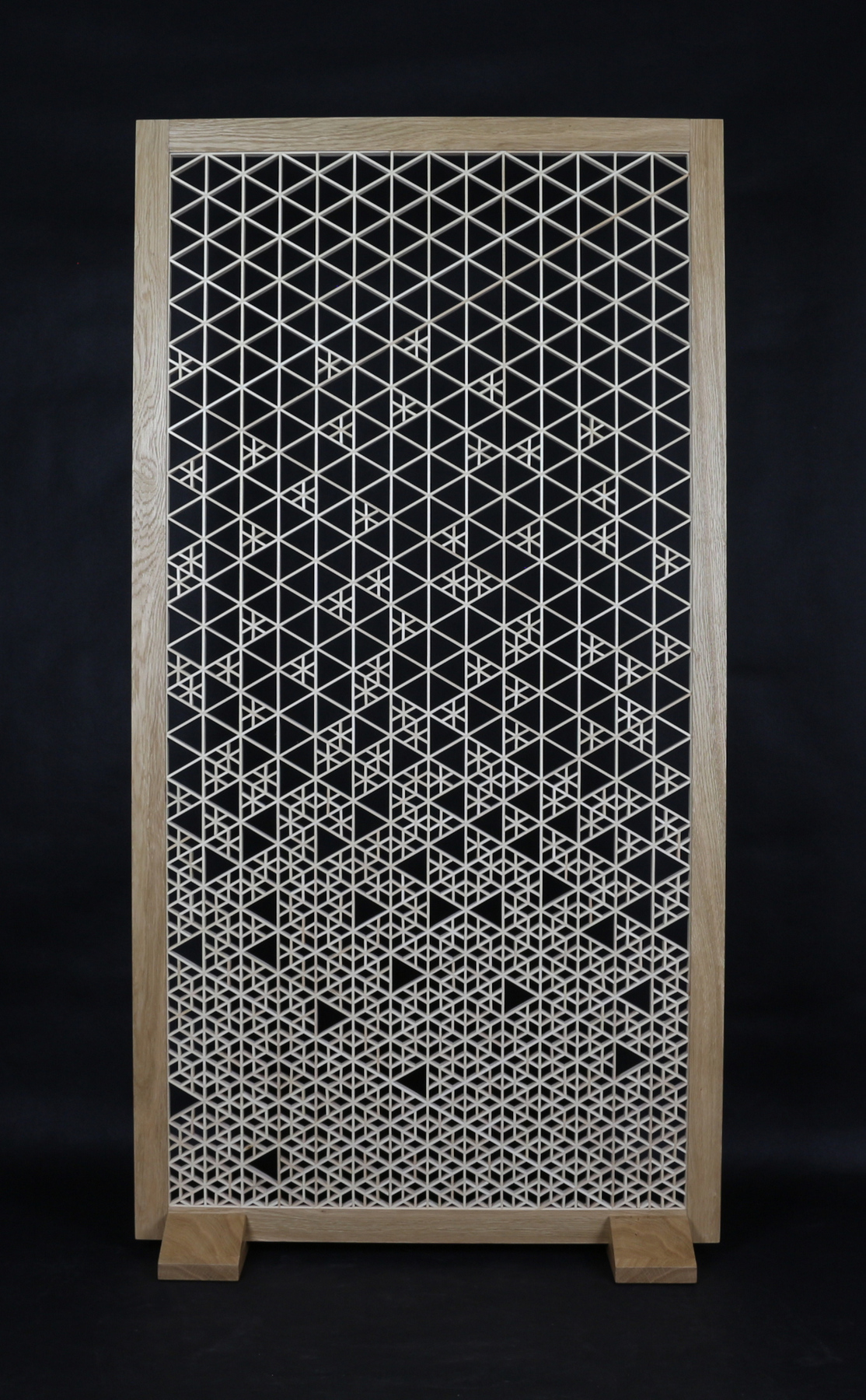
組子 Kumiko is a Japanese craftsmanship technique known from around the 7th century of the Asuka era, consisting in arranging geometric patterns from individual wooden slats without nails. When Buddhism reached Japan 1500 years ago, religious architecture was created mainly with the participation of craftsmen from China and Korea. The original form of the Kumiko technique already existed then, but in Japanese it has developed over the years into the form by which Kumiko is understood today. Traditionally, Kumiko has been used to create architectural elements such as balustrades or sliding doors. There are over 200 different different patterns used in it, each with a name related to nature as they are based on simplified motifs from nature’s elements.
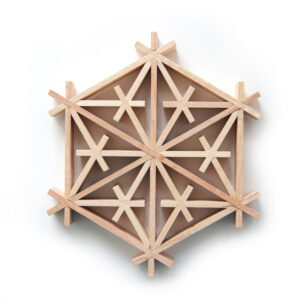
tsunoasanoha
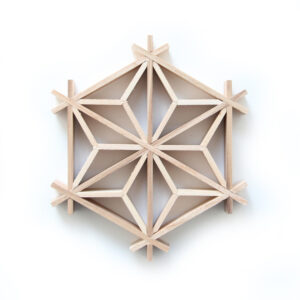
asanoha
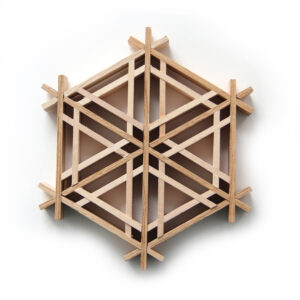
goma
STORY
It all started in the summer of 2017.
Chie, a Japanese woman who lives in Poland, got an order from one of the Japanese TV stations: “find a Polish religious sculptor who could fly to Japan in a week and stay there for a whole week.” Japanese TV station Asahi was looking for such a man for the program “Japan is admired by the whole world – ‘wow’ delegation” for the episode “World Heritage Kyoto “. In each episode, invited specialists from other countries watch Japanese craftsmanship techniques and their unusual examples. The result is usually a “wow!” sigh. Then the guests talk about their own work.
In the middle of the vacation, during a family trip, on the way in the car, Chie began to google slogans about religious carvers and call them because she didn’t know anyone. “Hello, can you go to Japan in a week? It’s all free.” No wonder people thought it was a joke.
Projects & Sales
IKI S.C. Chie Piskorska Michał Piskorski
our shop – MakiMaki &Friends:
ul. Krasińskiego 18, 01-581 Warszawa
kigi@kigi.pl
+(48) 453 433 500
Production
Andrzej Burkot PRACOWNIA SNYCERSKA
ul. Bielska 44, 43-436 Górki Wielkie